

Rolex Day-Date Replica: 36 vs 40, Calendar and Material Guide
The Day-Date combines two calendar displays with a distinctive dress-watch identity, so it exposes more replica weaknesses than a simple three-hand watch. The current genuine family is offered in 36 and 40 mm sizes, and Rolex positions the line in precious-metal configurations. That makes size, calendar operation, bracelet execution and material disclosure central to a serious comparison.
Choose the generation and size first
The current Rolex Day-Date collection uses 36 and 40 mm sizes. A 41 mm “Day-Date II” belongs to a discontinued generation and should be assessed separately. Replica sellers sometimes mix these names, so confirm whether the watch is trying to reproduce Day-Date 36, Day-Date 40 or legacy Day-Date II.
The day window is harder to execute than it looks
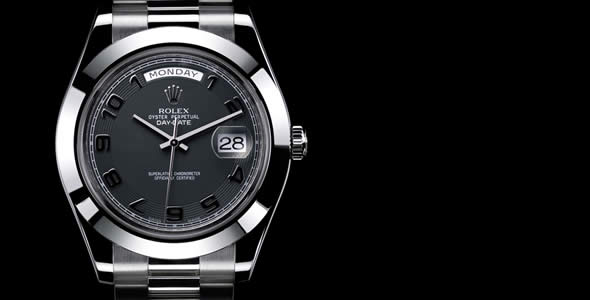
The full weekday display at 12 o’clock is one of the defining Day-Date features. Check whether the word is centered in the aperture, whether letter spacing looks balanced and whether different weekday names remain centered rather than only the sample day shown in product photos. A video cycling through the calendar is more useful than one static image.
Date/Cyclops alignment remains important
At 3 o’clock, inspect the date window, digit position and Cyclops alignment. The day and date should also change in a controlled way. If a listing claims a high-grade clone movement, ask whether both calendar displays quick-set correctly and whether the changeover timing is demonstrated.
36 vs 40 mm proportions
Day-Date 36 has a more traditional compact proportion; Day-Date 40 has a larger dial and broader wrist presence. The bezel width, marker scale, bracelet width and crown should all suit the case size. A generic oversized President-style bracelet can make the 36 mm version look especially unbalanced.
President-style bracelet and clasp
The rounded three-piece-link look is a major part of the Day-Date identity. Inspect link articulation, side finishing, end-link fit and clasp integration. On replicas, bracelet quality often affects the perceived quality of the whole watch more than small dial printing differences.
Precious-metal claims require evidence
Rolex genuine Day-Date models are associated with precious metals, but that fact does not transfer to replicas. Gold-colour plating, PVD finish, wrapped construction and solid precious metal are materially different. A replica listing should state the actual construction. Weight can provide context but does not by itself prove alloy composition.
Gem-set dials and bezels
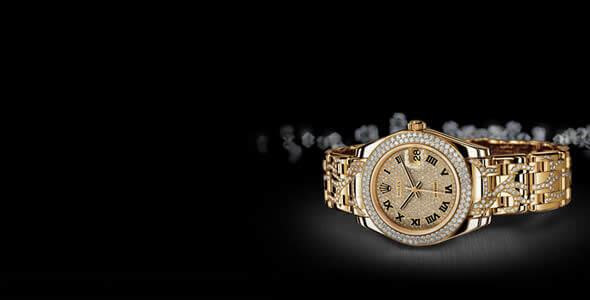
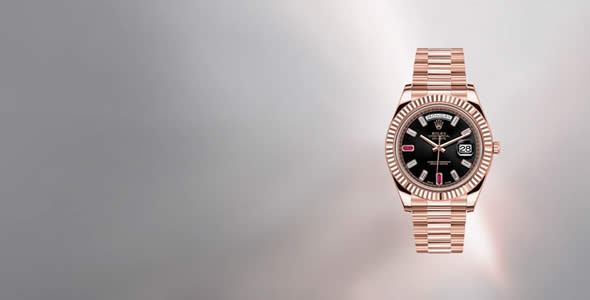
For diamond-style versions, inspect setting consistency, spacing and symmetry first. Then separate visual setting quality from gem identity. “Diamond” in a title should not be accepted as proof of natural stones without appropriate documentation or testing.
Movement and serviceability
Day/date mechanics increase the importance of movement quality. Ask for the actual calibre designation, crown positions, day/date quick-set behavior and service options. A movement that looks like a Rolex calibre through decoration may still use a different calendar architecture.
Day-Date QC order
- Confirm 36 mm, 40 mm or legacy Day-Date II.
- Check weekday centering across more than one day.
- Inspect date/Cyclops alignment.
- Verify day/date setting and changeover if movement quality is claimed.
- Inspect President-style bracelet and clasp.
- Separate metal/gem claims from appearance.
Day-Date language options and day-wheel alignment
One unusual feature of the Day-Date is the full weekday display, which has historically been offered in multiple languages. Replica sellers sometimes use this variety to justify any day-wheel printing. The correct test is not simply whether a language exists; the print quality, centering and wheel operation should still be consistent. If you want a non-English day wheel, ask to see several day names rather than a single sample.
Weight should be interpreted carefully
Gold-colour Day-Date replicas are often marketed using weight as a quality signal. Heavier construction can improve wrist feel, but it does not prove precious-metal content or reference accuracy. Internal weights, dense base metals and bracelet construction can all change total mass. Use weight as one physical characteristic, not as material authentication.
Day-Date FAQ
Is stainless-steel Day-Date an official current configuration?
The current genuine Day-Date line is positioned in precious-metal configurations. A steel-colour replica may be a fantasy or custom interpretation and should be described that way.
Is Day-Date II the same as Day-Date 40?
No. Day-Date II is a discontinued 41 mm generation. Day-Date 40 is the current larger Day-Date size.
What is the most important functional test?
Verify both calendar displays: day centering, date alignment, quick-set behavior and changeover operation.